Dental Implants
Dental implants provide patients in Ashburn, VA with a reliable, long-term solution for replacing missing teeth while restoring function and appearance. A dental implant is a titanium post that Dr. Baftechi places surgically into the jawbone, where it fuses with bone through osseointegration to create a permanent, stable foundation for a custom ceramic crown.
Unlike bridges, implants don't require altering adjacent healthy teeth. Unlike dentures, they never slip or need adhesive. With proper care, they can last a lifetime. Healthy gums are essential for implant success — learn about our gum health treatment options, or schedule a consultation to find out if implants are right for you.
Book an Implant Consultation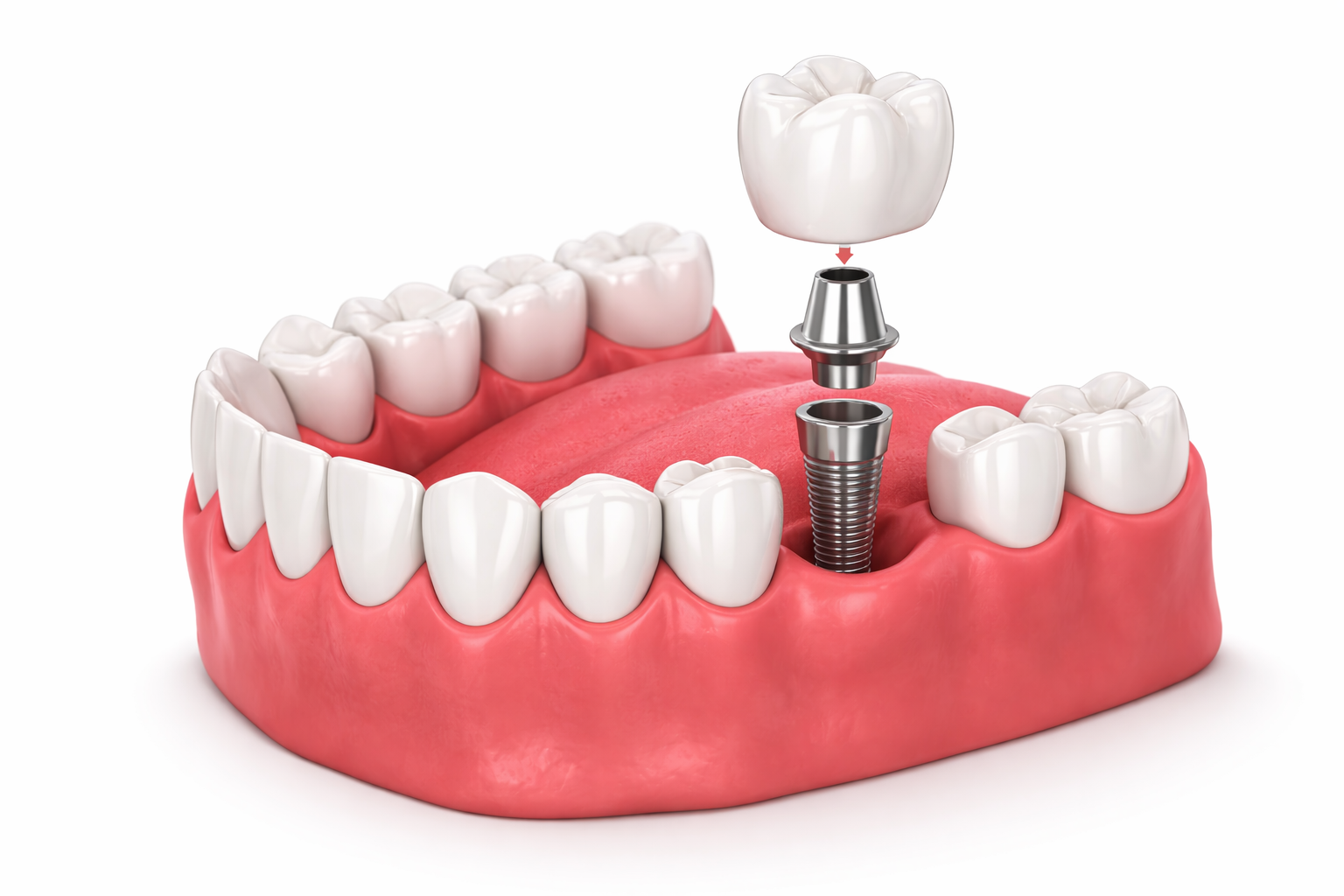
Why Dental Implants
Custom ceramic crowns are matched to your natural teeth in shape, size, and shade — completely indistinguishable from real teeth and designed to complement your unique smile.
Unlike dentures, implants are permanently anchored in your jawbone. No slipping, no shifting, no adhesive — just total confidence when you eat, speak, and laugh.
Dental implants have a documented 95–98% long-term success rate, making them one of the most predictable and reliable procedures in modern dentistry.
With proper care and regular checkups, the implant post itself can last a lifetime. No replacement cycles, no hidden costs — the most cost-effective long-term solution available.
When a tooth is lost, the jawbone begins to atrophy. Implants are the only tooth replacement that stimulates the bone — preserving your facial structure and preventing bone loss.
Implants restore virtually 100% of your natural chewing function. Enjoy steak, apples, corn on the cob — every food you love — with zero restrictions or discomfort.
3D CBCT Imaging
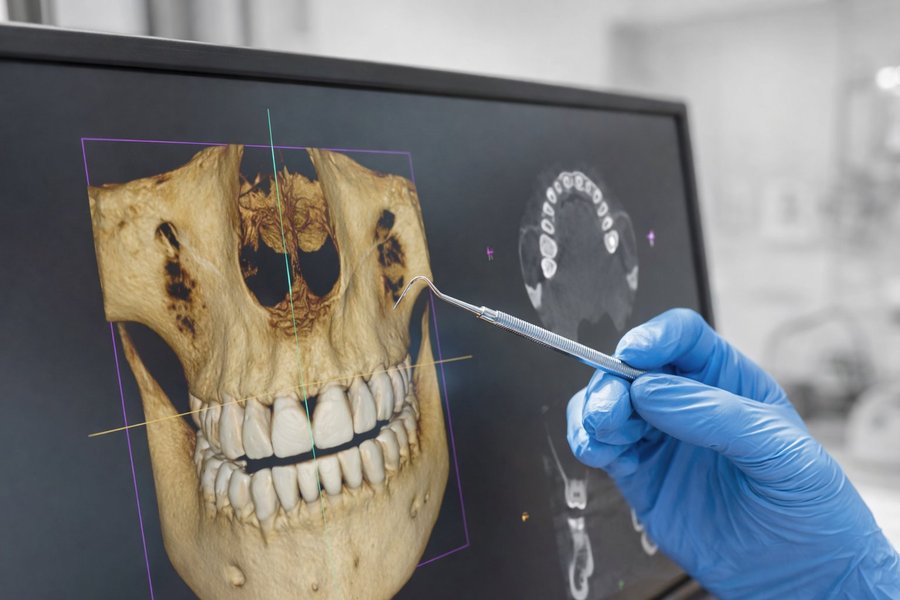
At POSH Smiles, we use in-house 3D Cone Beam Computed Tomography (CBCT) imaging — the most advanced diagnostic technology available for implant planning. Unlike traditional 2D X-rays, CBCT produces a comprehensive three-dimensional view of your teeth, jawbone, nerves, and surrounding anatomy in a single scan.
Optimal implant positioning — Dr. Baftechi can visualize your bone volume and density in 3D, selecting the precise location, angle, and depth that ensures maximum integration and stability.
Nerve and sinus mapping — CBCT clearly identifies critical anatomical structures, allowing Dr. Baftechi to plan placement that avoids nerves and sinuses for a safer procedure.
Bone graft assessment — If bone grafting is needed, CBCT helps determine the exact amount and location of graft material required — eliminating guesswork entirely.
Better outcomes for you — Precise digital planning means fewer surprises, a smoother procedure, faster healing, and results you can trust for decades.
The Implant Journey
Getting dental implants is a multi-step process that unfolds over several months — but our team is with you every step of the way, ensuring your comfort and confidence throughout.
Dr. Baftechi performs a thorough exam including in-house 3D CBCT imaging to assess bone density, nerve locations, and determine your candidacy for implants.
A precise digital treatment plan is created, mapping the ideal implant position. If extractions or bone grafting are needed, these are scheduled first.
Under local anesthesia (with nitrous oxide available for relaxation), Dr. Baftechi surgically places the titanium post into the jawbone at the pre-planned position.
Over the next 3–6 months, the implant fuses with your jawbone — a process called osseointegration. We monitor your progress until full integration is confirmed.
Once healed, Dr. Baftechi attaches an abutment and your custom ceramic crown, bridge, or implant-supported denture — completing your new, permanent smile.

Are You a Candidate?
Most healthy adults with missing or failing teeth are excellent candidates for dental implants. Here's what Dr. Baftechi evaluates to determine if implants are right for you:
Good general health supports a smoother healing process. Conditions like uncontrolled diabetes may require special consideration but don't automatically disqualify you.
Healthy gum tissue is essential. If gum disease is present, Dr. Baftechi will treat it first to ensure the ideal environment for a successful implant.
Adequate jawbone is needed to anchor the implant. If bone loss has occurred, bone grafting can often build it back up — opening the door to implants even in challenging cases.
Smoking can impede healing and reduce implant success rates. Non-smokers have the highest long-term success, though smokers may still be candidates with careful evaluation.
Not sure if you qualify? The only way to know for certain is a consultation with Dr. Baftechi. Many patients who were initially told they weren't candidates have successfully received implants after treatment.
Common Questions
The implant placement procedure itself takes about one to two hours per implant. However, the full process — including healing and osseointegration — typically takes three to six months or longer, depending on your individual healing and whether preparatory procedures like bone grafting are needed. The wait is worth it: the result is a permanent tooth replacement that can last a lifetime.
The procedure is performed under local anesthesia, and nitrous oxide is available if you'd like extra relaxation. Most patients report that placement is more comfortable than they expected — often less uncomfortable than a tooth extraction. Some soreness and swelling in the days following is normal and typically managed well with over-the-counter pain relievers.
Implant care is almost identical to caring for natural teeth: brush twice daily, floss once daily (including around the implant), and attend your regular six-month checkups at POSH Smiles. Unlike natural teeth, implants cannot get cavities — but the surrounding gum tissue still needs to be kept healthy to ensure the implant stays secure for decades.
Insufficient bone is one of the most common concerns — but it's often not the obstacle people think. Using our 3D CBCT imaging, Dr. Baftechi can precisely assess your bone volume. If there isn't enough, bone grafting can rebuild the necessary foundation. Sinus lifts may be needed for upper jaw implants. Dr. Baftechi will walk you through every option during your consultation.
While implants have a higher upfront cost than bridges or dentures, they are widely considered the most cost-effective long-term solution. Dentures and bridges typically need replacement every 5–15 years, while a well-maintained implant can last a lifetime — making the total lifetime cost often lower. Beyond cost, the quality of life improvement — eating freely, smiling confidently, and preserving your jawbone — is difficult to quantify.
Our Location
Our dental office is conveniently located in One Loudoun, making it easy for Ashburn residents and patients throughout Loudoun County to access permanent tooth replacement solutions.